


Why the humble hatchback could save Europe’s car titans
Why the humble hatchback could save Europe’s car titans

Matt OliverFri, October 16, 2026 at 5:00 AM UTC
0

Small cars made a big splash at this year’s Paris auto show.
Small cars made a big splash at this year’s Paris auto show.
At the biannual industry gathering, a parade of new electric city cars and hatchbacks was unveiled by Europe’s automotive giants.
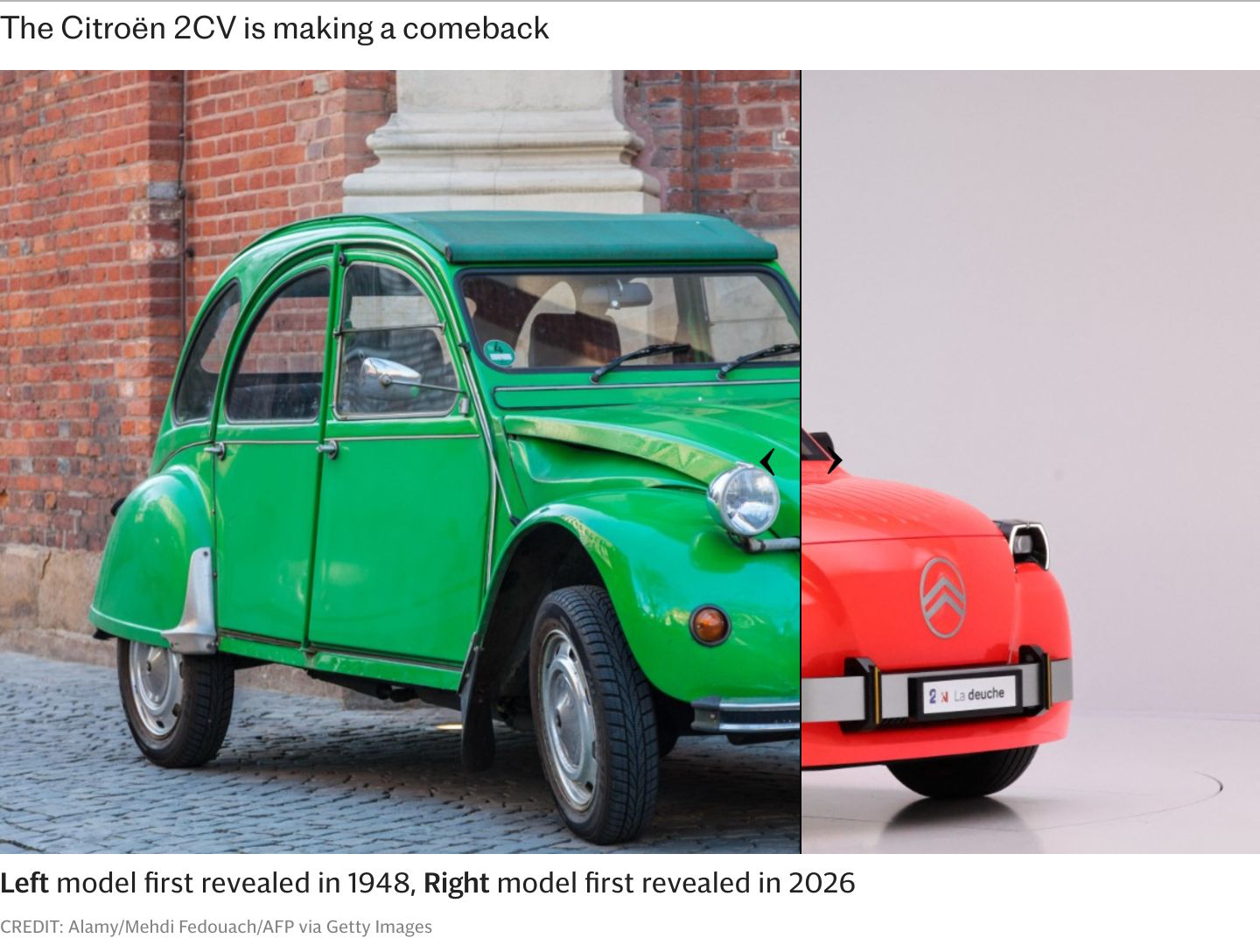
They included an eye-catching reimagining of the Citroën 2CV and new versions of the Dacia Spring, Vauxhall Astra and Fiat Panda, all aimed at the affordable end of the market.
The new 2CV, kitted out with a canvas roof and retro styling, is expected to sell for just €15,000 (£13,000), with a full production car due in 2028.
A concept version unveiled on Monday featured playful design touches, from eye-like headlights to an egg tray inside the passenger door – a nod to the original model’s roots as a runabout for French farmers.
A second-generation Dacia Spring hatchback will also launch next year, priced under €18,000.
Even cheaper, more compact offerings will include the tiny, four-seater Fiat Multiplina – technically a quadricycle, and less than three metres long – at around £14,000.
Separately, France’s Renault is also preparing to launch the zippy Twingo city car in the UK after the runaway success of its Renault 5 hatchback.
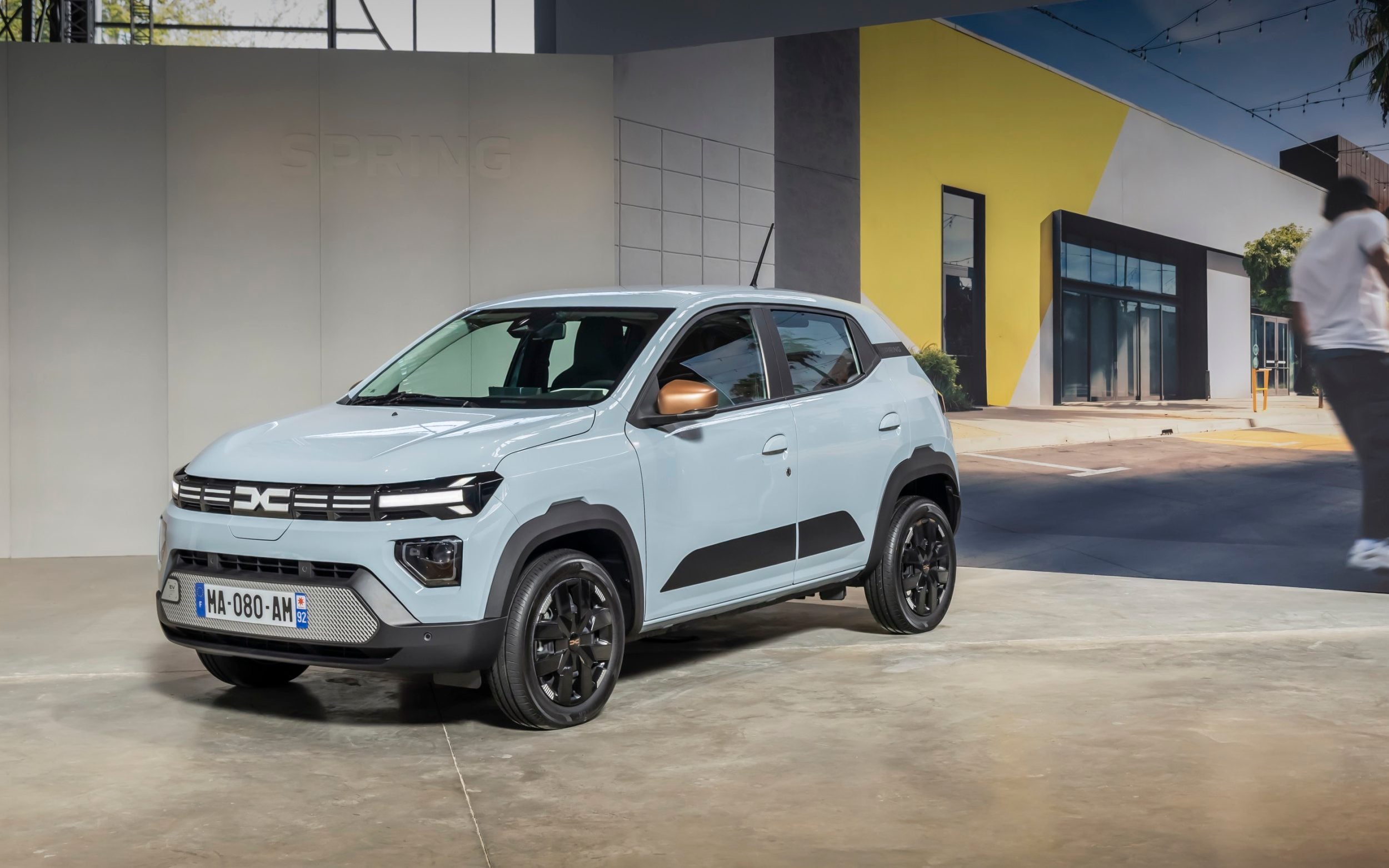
A new model of the Dacia Spring will be launched next spring - Adrien Cortesi
The debut of so many European small cars at once represents a return for the Continent’s manufacturers to a slice of the market they’ve somewhat neglected in recent years.
With the advent of electric vehicles (EVs), many have concentrated on larger, more expensive models, such as SUVs, that can absorb the costs of batteries, technology and new regulations more easily.
They have also been under pressure from shareholders to focus on profits to combat flatlining consumer demand in Europe since the Covid pandemic.
But that has also created space for Chinese competitors, such as BYD and Leapmotor, to gain a substantial foothold.
These companies have broken into Western markets with popular, lower-cost models – including BYD’s Dolphin – and they were out in force at Paris, where Leapmotor announced a new sub-£20,000 model called the B03, for example.
Since 2020, Chinese brands have gone from selling less than 1pc of entry-level cars in Western Europe to selling more than 5pc, according to a report by data company Mobility Global.
Overall, they are expected to capture 20pc of the market by 2030 – up from around 10pc currently.
The rapid expansion is being driven by overcapacity at home, where some 50pc of China’s automotive factory capacity is estimated to be idle, according to a separate report this week by Mobility Global.
That is pushing Chinese carmakers to seek sales abroad aggressively, with Europe an obvious target.
The EU has attempted to defend domestic companies against the onslaught by imposing tariffs of up to 45pc on Chinese electric vehicles.
But so far this has done little to stop them. The Chinese are now starting to buy up spare European factory capacity or build their own sites to avoid tariffs altogether.
The return of the hatchback to the Paris auto show therefore “reflects a recognition that European manufacturers cannot afford to retreat from the affordable end of their home market”, says Calum Macrae, of Mobility Global.
In a new report this week, Macrae and his colleagues argue that Chinese dominance is not inevitable and that ceding the cheaper end of the market would be a damning mistake.
The past rise of Japanese and Korean carmakers shows that insurgents tend to start with cheaper cars before progressing into more premium offerings over time.
Chinese brands appear set to make this transition even more quickly, Mobility Global says.
It means that surrendering low-cost, higher-volume models and attempting to retreat to expensive cars could ultimately leave Europe’s manufacturers smaller and far less profitable.
“The small car is becoming strategically important again because European manufacturers and policymakers have realised that affordability is becoming a competitive vulnerability, at exactly the point Chinese manufacturers are getting better at exploiting it,” adds Macrae.
Advertisement
He believes European manufacturers still enjoy some substantial advantages: well-known brands, large dealer networks and decades of experience designing small cars for European customers and their roads.
Yet today, being able to produce small cars that are priced affordably and can be produced profitably “are increasingly different things”, Macrae says.
It’s a problem that’s “particularly acute at the affordable end of the market” because margins are so thin.
And this is where China’s current advantages are such a threat.
Threat of China’s cheaper costs
Unlike internal combustion engine cars, which European giants, such as Volkswagen, have been perfecting for decades, it is the Chinese brands that are the leaders in electric car technologies, most notably batteries.
Both Mobility Global and AlixPartners, in another report, argue this is not simply the result of cheaper labour and materials, weaker environmental regulations or state subsidies, either.
Instead, Chinese carmakers have managed to shave costs off every stage of development and production through vertically integrated supply chains and their country’s enormous scale.
This is not dissimilar to the way Henry Ford took top-to-bottom control of his manufacturing process to make the mass-market Model T car.
China’s auto giants are also pushing the envelope on software and in-car technologies, as consumer expectations in this area grow, and can turn around new models in as little as two years.
Western and Japanese brands traditionally take at least five.
As a result of all this, AlixPartners estimates that Chinese-made EVs typically cost about $20,000 (£15,100) to produce – compared with $31,000 for a comparable European model.
“The question is no longer whether European automotive needs to transform,” the consultancy warned this week.
“It is whether the organisations built for a globalised, internal combustion engine-dominant world can transform fast enough to compete in a regionalised, software-defined one.”
Yet all this has come at a fiendishly difficult time for Europe’s car industry.
As they try to find billions of euros to invest in new EV models and technologies, the Continent’s biggest manufacturers are also saddled with substantial legacy costs related to petrol and diesel car factories – some of which are barely being used.
It means they face a challenge of defending their home market against ultra-low-cost Chinese rivals, while simultaneously investing to build new products.
Things are also becoming “more complicated than simply Europe versus China”, with European manufacturers increasingly drawing on Chinese technology themselves to develop new cars.
Stellantis has partnered with Leapmotor, for example, while Renault developed its new Twingo city car at a research centre in Shanghai and VW has said it will develop more cars in China.
Others are more positive about the European fightback, however.
Robert Forrester, the chief executive of leading UK car dealership chain Vertu Motors, says he thinks the revival of affordable hatchbacks will go down well with drivers.
“These sorts of cars have largely disappeared, largely due to government regulation around emissions, actually, and it’s good to see them coming back, many in an electric format,” he says.
“The success of the Renault 5, which has been massive – that sort of retro look but a nice car - has pointed the way for the traditional brands to get back on the front foot.
“I thought the Citroën 2CV looked like a cracking car.”
But he is also under no illusions about the challenge European brands face.
“The Europeans are fighting back with some good stuff,” Forrester adds.
“But that’s not to say the Chinese won’t remain a significant force here. They clearly will.”
Source: “AOL Money”
